• Skip to primary navigation
  • Skip to main content
Anytown

Anytown

Developing Leaders. Embracing Diversity.

  • Home
  • About Us
    • Our People
    • Join Our Board
    • Our Supporters
  • Programs
    • Anytown Leadership Camp
    • Anytown At School
    • Anytown Youth Council
  • News & Events
    • Blog
    • Events
    • Annual Report
  • Make a Difference
    • Volunteer
    • Donate
    • Refer
    • Sponsorship
    • Join Our Board
  • Shop
  • Contact Us
  • Show Search
Hide Search

Anytown Alumni

Silence is Compliance

January 27, 2025 By anytown

Anytown Alumni

Silence is Compliance

By Karyleni Alburquerque · January 27, 2025

I never thought of myself as a political person. I wrongfully believed that someone like me—a young, Black Latina with no social capital, no connections, and no higher education—had no place in politics. It felt like a conversation I didn’t deserve to be a part of, a table where I had no rightful seat.  

That changed the day a dear friend introduced me to the power of civic engagement.  Suddenly, I realized that politics isn’t just about policies; it’s about people, communities, and the future we shape. And if young people like me stay silent, we give others the power to decide our future for us.  

That realization stuck with me, especially as I watch what the United States is becoming and reflect on what could have been. Our nation—once a beacon of hope and opportunity—is now crumbling under the weight of its own contradictions. The very principles we claim to stand for—freedom, justice, and equality—are being mocked by those in power. And in the most unfortunate way possible, young people will be the ones inheriting this broken system.  

What if I told you that by staying silent, we are handing over our power to those we do not represent us? What if I told you that by using your voice, you can influence—perhaps even dictate—the trajectory of your future?  

Politics is happening all around us, whether we engage or not. Our very existence is political. So why do so many of us choose to stay on the sidelines?  

Look around you. Mass deportation and criminalization of immigrants, war and famine, the blatant attacks on the LGBTQIA+ community and other marginalized groups, and the relentless battle for women’s reproductive rights. Silence in the face of these injustices is not neutrality, it is compliance. By staying silent, we allow these issues to persist and worsen. We become complicit in the systems that oppress and silence the most vulnerable among us. These are not new fights. They have been fought—and are still being fought—by people who have felt just as helpless as we do now. Some battles have been lost. Some battles are still being fought. But most importantly, some battles have been won.  

We cannot afford to disengage. We must use the power of our voices to continue winning battles.

Young people, do what you must. Yell. Shout. Speak, even if your voice cracks, even if there is a knot in your throat. Speak with passion. Make your voice heard.  

But whatever you do, remember your purpose and your morals. Never stoop to the level of the oppressor.  

I, too, still struggle. I fear for what the fate of America and its people will be. But I live with the hope that America—as it always has amidst grand turmoil—will rise again. That its people will remember what empathy is, and that its presence will never fade.  

Young people, I urge you: recognize that an attack on one of us is an attack on all of us. We are more connected than what meets the surface. There is power in resistance, in refusing to comply with oppression, and in daring to demand a better future. The question is, will we rise together? 
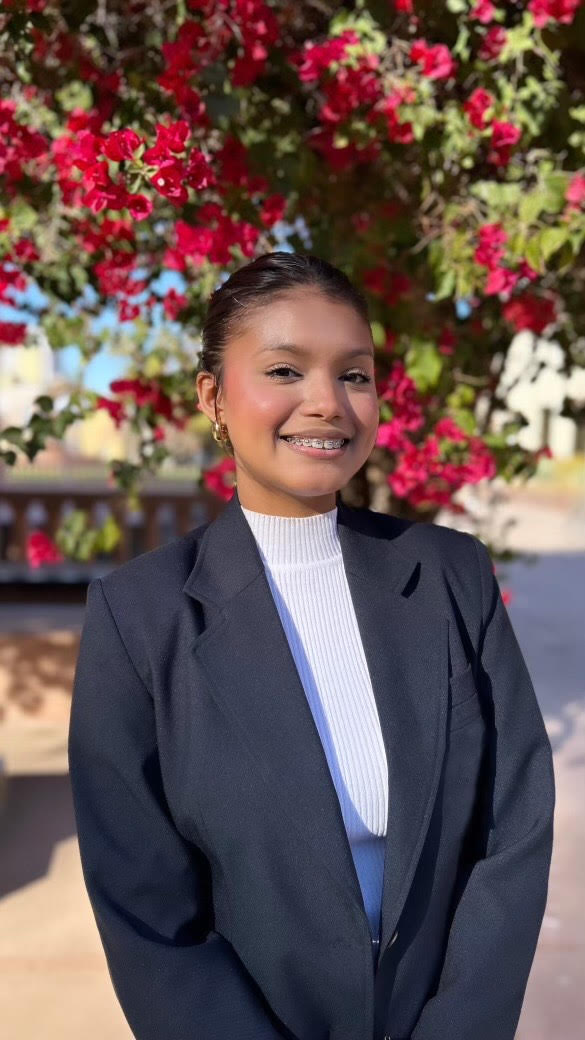
Karyleni Alburquerque
About the author

Karyleni Alburquerque

Anytown Volunteer & Youth Council Member

Share your voice

Have a story to tell?

We welcome guest blog submissions from alumni, staff, families and community members on an ongoing basis.

Submit a Story
← Back to the Blog

The Friendship Decline

April 24, 2023 By anytown

Anytown Alumni

The Friendship Decline

By Nadia Fontes · April 24, 2023

Friendships are struggling. Recently, I watched a video titled “The friendship recession” by Richard Reeves who pointed out the very real challenges our society is facing when it comes to friendships.

There has been an increasing decline in the amount of friends we have, people are seeing their friends less, people are meeting new people less frequently and it negatively affects our health. 

According to the Survey Center on American Life “The financial devastation wrought by the COVID-19 pandemic has been well-documented, but less widely reported is the emotional toll many Americans faced as a result of quarantine requirements and self-imposed social isolation. Nearly half (47 percent) of Americans report having lost touch with at least a few friends over the past 12 months. Nearly one in 10 (9 percent) Americans report having lost touch with most of their friends.”

Loneliness is not good for our mental health and not having friends to turn to for emotional support in hard times is going against our fundamental nature as humans. 

We require connection in order to be happy and healthy. As we’re coming out of a pandemic that isolated us at our homes, we have also lost physical spaces that weren’t our homes or school or work that provided opportunities to meet new people. 

Experiences like Anytown are really important to push towards young people; it is a way in which they can meet new people different from them, giving them a sense of belonging in a community that is inclusive. 

Most of the friends who I’ve kept in touch with the longest I met my delegate year. My closest friends I met at Anytown and our lives would have never crossed if we hadn’t decided to apply that summer and be open to connection. 

Anytown camp allowed me to form bonds with people who understand me and love me, people who give my life purpose and support me in times of need. 

It is critical we prioritize friendship in our lives for our well being and joy. 

Nadia Fontes
About the author

Nadia Fontes

Anytown Board Member

Share your voice

Have a story to tell?

We welcome guest blog submissions from alumni, staff, families and community members on an ongoing basis.

Submit a Story
← Back to the Blog

Black History, Our History.

February 27, 2023 By anytown

Anytown Alumni

Black History, Our History.

By Kenyan Cole-Suggs · February 27, 2023

As Black History Month comes to a close, I find myself reflecting on which Black figures in history I heard brought up in conversations, on posts, or in school.

Being in college, I am able to receive a much more comprehensive education on Black figures and take classes in subjects like African American studies.

Looking back at high school though, I remember all we ever really learned about was MLK, Rosa Parks and sometimes a little bit about Malcolm X, though never in a very positive light.

His desire for non-violent protest and the actions of the Black Panthers are very easily brushed over and pushed to the side by most teachers. They fall victim to an education system that needs history to look a very specific way. 

Real history scares people.

 Just look at the banning of AP African American studies in Florida. Governor DeSantis of Florida said much of the curriculum “lacked educational value.”  It hurts for such a high-ranking government official or really anyone to say my history lacks educational value when so much of my people’s contributions to America have helped shape the country. In school, we are often reduced to only the times of our struggles. We are slaves being beaten and sold, an “economic issue” of free labor during the civil war, and rebellious menaces for the Civil Rights Movement. 

While these are all very important issues of African American History, it hurts that Black joy and beauty are hardly ever taught in schools. We often barely learn about our contributions to art and music with the Harlem Renaissance. Success like Black Wall Street and its violent burning by a white mob are ignored. Even very influential figures from the Civil Right Movement like Bayard Rustin are left out. These things matter in how I have come to exist as an African American man today, so why shouldn’t they matter to everyone? They are a part of American history and should be taught in the core curriculum of schools; but many like me know that with the current climate of American education, that would be too much to ask for. 

To have an elective course though for students is an amazing first step, especially for it to be an AP course used for college credit for students, perhaps leading to further studying into African American studies beyond high school. Then to have governments like Florida strike down even the inclusion of an elective course in their schools, feels like progress may never come. 

The College Board is an accredited organization monopolizing a lot of advanced education in America. I was quite surprised to hear that Florida would fight even them when the news broke. Even if an organization that caters to rich-white America couldn’t create a program that governments like Florida approve of, then what aspects of African American culture and history could be taught? 

Kenyan Cole-Suggs
About the author

Kenyan Cole-Suggs

Anytown Intern · Anytown Alumni, Northwestern University

Share your voice

Have a story to tell?

We welcome guest blog submissions from alumni, staff, families and community members on an ongoing basis.

Submit a Story
← Back to the Blog

Ivonne’s Story: Learning About Ableism

July 11, 2020 By anytown

Anytown Alumni

Ivonne’s Story: Learning About Ableism

By Ivonne Estrella Dominguez · July 11, 2020

I attended Anytown Leadership Camp in 2018 as a delegate and Anytown has changed my life. 

For starters, I made a lot of friends at Anytown. I liked that we would get together to do ice breakers and fun activities to start the day and sing by the campfire with everyone in the evening. 

During the day we would participate in exercises that brought awareness to issues facing our world.

We got to have interesting conversations during and after the activities on what we saw and how we felt and learned about how everyone has different experiences. I got to learn about different cultures and religions and the activities that we did brought so much awareness to me.  Every moment of what we did was powerful.

The topic that really got to me at camp was learning about Ableism.

 Ableism is discrimination and social prejudice against people with disabilities or who are perceived to have disabilities.  The Ableism program really affected me.  During this program at camp, I started to feel proud of who I am and proud for having Autism. When I shared about my experience I didn’t feel shame and saw others being proud of who they are too. I grew so much confidence during Anytown, that on Talent Night, I went up and performed the song “Scars to Your Beautiful” in front of everyone.

In one of the last activities of the week, Anytown had us write down our goals and obstacles on a wooden board. We were then going to learn to break the boards. When I wrote mine down, I decided that I was ready to break my board on the “obstacle” side to show that I am not going to let any obstacles that I face keep me from wanting to achieve goals for myself. 

When I left camp, I always kept the Anytown spirit with me. Anytown inspired me to keep moving forward. I left camp not only with leadership experience, but with wanting to spread love and kindness to everyone. I continue to be involved at school and out in the community. 

I recently started to volunteer with an organization called Lucha. I’ve been volunteering with Lucha for almost 2 years. When I learned about what Lucha was and what they stood for, I knew at that moment that it was something I wanted to do and be a part of. We invite people to our events and talk about the issues happening in the Latinx community. We talk about voting and how every vote matters. Like Anytown, we talk about how to use our voices to make change.

Lucha has motivated me to use my voice to stand for my community. Tu Lucha es mi Lucha!

And – I thank Anytown for where I am today. I hope to one day return as an Anytown counselor and to get more youth to come to camp so they can learn and have the same experience I did!

Ivonne Estrella Dominguez
About the author

Ivonne Estrella Dominguez

Maryvale High School · Anytown Alumni Class of 2018

Share your voice

Have a story to tell?

We welcome guest blog submissions from alumni, staff, families and community members on an ongoing basis.

Submit a Story
← Back to the Blog

Brynn’s Story: Asian-American in COVID-19 Era

May 25, 2020 By anytown

Anytown Alumni

Brynn’s Story: Asian-American in COVID-19 Era

By Brynn Kramer · May 25, 2020

Over these last few months, we have all had the shared experience of having our world changed by COVID-19. It has looked different for everyone, but that has been the baseline of our year.

In the United States, this has meant a rise in hostility against the Asian American community. I can only speak to my experience, which has been very little as:

  • a white-passing half-Filipina and,
  • as a person who has not left the house in months.

I have seen the growing reports of hate crimes against my community, I have seen my mother worry about how she looks when she goes out for groceries, I have seen those that I love suffer.

I know, in my life, that I have been very privileged. I have never been afraid to be Asian – yes, I have been targeted for it at school, yes, I have been ashamed of it among my white peers. It’s something that I grappled with accepting as a mixed-kid, and while I can easily say that I am proud now, there were times that I just wanted to be fully white. Still, I have been incredibly privileged in that I never felt I would be in physical danger because of my racial identity, and I have been even-more privileged in that I know I can often choose to be known and recognized as Asian – or not.

That was something that changed when the US’s mindset on Asians changed. 

We are seen as a disease, now. And, for the first time in my life, when I went out with my parents to an Asian market for groceries, I was scared. 

The physical mask I wore on my face took away the invisible one I had – my eyes were the only facial feature that could be seen, and my eyes do not look white. I felt I had lost my ability to pass as white, to cling to that privilege out of fear.

When I first got out of the car, I saw an older white man staring at me. It was not a nice stare. I may have been reading into the situation, I know, but his glare did not break. I felt like he was angry and, for the first time, I was afraid to be Asian.

Being afraid now has become familiar to me.  I am afraid for my grandparents, both because of their appearance and their health, for my mother in the largely white community we live in, for my fellow Asian friends who are also discovering my newfound fear, even for the Asian-run restaurants that I grew up on that are losing business due to the racialization of a disease.

I’ve been in quarantine in my home since March 14th – I have left only once, to go get those groceries. Again, I am privileged in that I can stay home, that I can be comfortable, but it has been difficult because it has left me with only being able to see more and more hate against my community shared on social media and popping up on the news.

What is there to ask of my non-Asian friends? Do what you can to flatten the curve, do what you can to support Asian businesses, do what you can (smile, don’t stare) to make us feel at ease in public – I know many of us are incredibly scared to go somewhere as simple and essential as the supermarket.

Know that COVID-19 is not the “Chinese virus.” Do not blame the people for the government’s actions, wherever that may be. Listen when we talk, and see us as human, not just carriers of a disease. Talk to your friends and families about this too.

But now we have more members of the Asian community asking for unity, especially “#POCunity!” While that is very much a cause I would like to see, where is the support that we offer?

There was no “POC unity” in the Asian-American police officer that stood by and watched while George Floyd was murdered.

He is not an exception to our Asian American community, rather, he is the result of a community that has grown to love black culture but not the people, the result of our mindset of anti-blackness and colorism that is all too accepted and never talked about.

If we want the unity so many of us ask for, it is also our job to educate ourselves and address our own issues first. I know I cannot speak for all of us, and I know that there are other voices that deserve to be heard – so listen, educate, and speak out yourself. It’s difficult, but talk to your families as well. We are not the model minority they want us to be – we should never accept that role when it hurts not only us, but other minorities that have fought for all POC time and time again.

It is our duty to resolve to be better, no matter our identity, and maybe then we can achieve the solidarity we ask for.

Brynn Kramer
About the author

Brynn Kramer

Pinnacle High School · Anytown Alumni Class of 2019

Share your voice

Have a story to tell?

We welcome guest blog submissions from alumni, staff, families and community members on an ongoing basis.

Submit a Story
← Back to the Blog
  • Email
  • Facebook
  • Instagram
  • LinkedIn
  • Phone
  • YouTube

© 2026 Anytown Leadership Program, Inc. · A 501(c)(3) nonprofit organization